

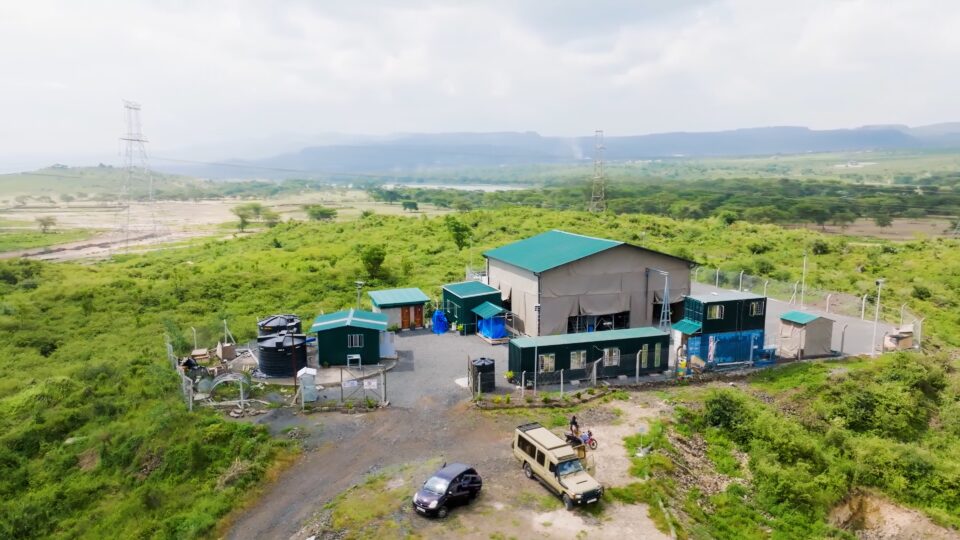
As the Global South’s first Direct Air Capture (DAC) company, Octavia Carbon has commissioned the world’s second DAC + geological storage plant. Harnessing Kenya’s abundant renewable geothermal energy to capture carbon dioxide from the air for secure storage underground, Octavia has developed a scalable technology that relies on the unique performance characteristics of Vaisala’s CO2 measurement sensors.
Background
Global efforts to fight climate change seek to lower the levels of greenhouse gases (GHGs) in the atmosphere. This can be achieved by reducing GHG emissions, from industry, buildings and transportation for example, and by removing GHGs from the atmosphere. Carbon capture can be employed in both of these scenarios – capturing CO2 from point-source emissions, and capturing CO2 directly from the air – DAC.
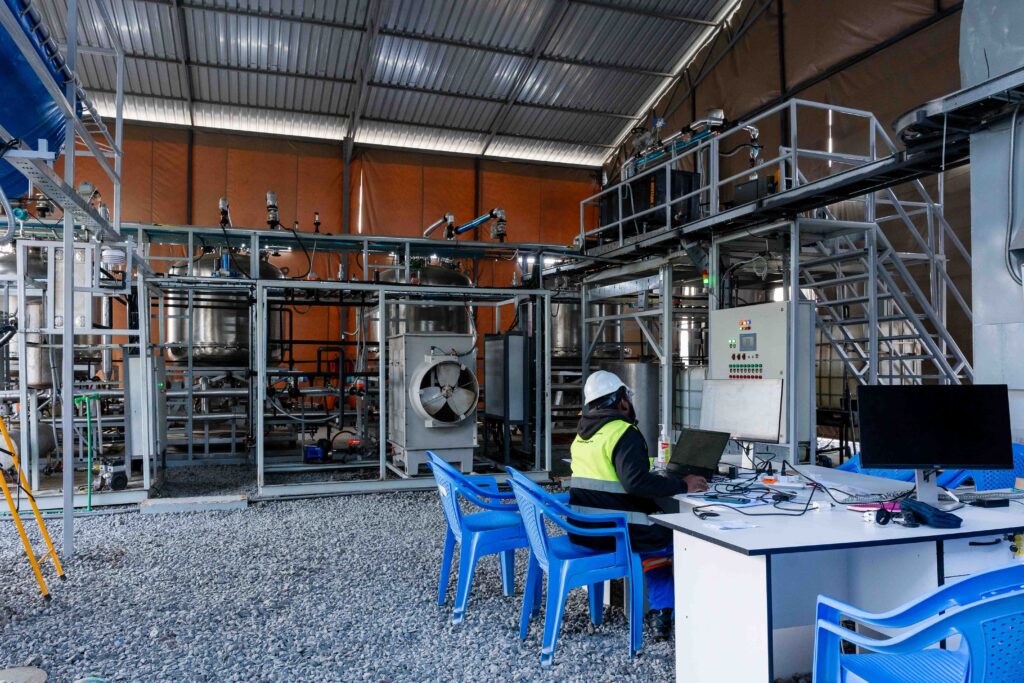
The DAC process requires energy, so for the process to deliver a net reduction in GHGs, it is necessary for the energy supply to be carbon neutral. Here, Kenya has a significant advantage – the Kenyan stretch of the Great Rift Valley offers enormous potential in geothermal energy. Tectonic plate movements around 25 million years ago, allowed water to percolate into contact with hot rocks 1-3 km beneath the surface, creating a mix of superheated, high-pressure water and steam – perfect conditions for generating geothermal energy.
Today, around 90% of Kenya’s electricity is generated from renewable energy sources, of which geothermal remains the most significant source. The country’s geothermal power generation plants also create waste heat, and Octavia Carbon’s technology has been designed to utilize this resource. In addition, this underground volcanic geology is ideal for permanent underground CO2 storage.
The success of DAC is heavily dependent on the efficiency with which it is able to remove CO2 from the air. In particular, DAC operators must maximise the difference between the flow of captured CO2 and the CO2 emissions of the capturing process. The accurate measurement of CO2 concentration is therefore critically important.
Octavia Carbon
Founded in 2022 by two innovators, Octavia Carbon now employs over 60 people on its mission to scale DAC technology down the cost curve and up the impact curve. The company’s goal is to provide an effective solution for durable carbon removal, and to act as a catalyst for green industrial growth and climate justice in the Global South.
In September 2025, the Second Africa Climate Summit concluded with a clear call to position Africa, not as a victim of climate change, but as a driver of solutions in the global climate economy. Octavia Carbon was established to become one of these solutions.
Octavia offers a number of Carbon Dioxide Removal (CDR) packages which enable individuals and organisations to make philanthropic donations and/or offset their carbon emissions. In addition, organisations participating in Carbon Trading are able to purchase CDR Credits directly from Octavia.
After capturing CO2 directly from ambient air, Octavia liquifies the gas and transfers it to a partner for permanent underground geological storage.
CO2 measurement challenge
Conscious of the requirement to develop a DAC process that is as efficient as possible, Octavia’s optimization team needed to be able to take accurate inline measurements at every stage of the process. In addition, verification of Octavia’s carbon capture process can only be possible with accurate reliable CO2 measurements.
Octavia staff tried and discarded several products from CO2 sensor manufacturers before adopting Vaisala’s. Khamis Mwalwati Muniru, Process Optimization Lead at Octavia, explains. “Within my team, we rigorously test materials to assess their CO₂ capture efficiency. This process demands precise CO₂ monitoring across a broad concentration range, spanning from 0-100% vol during CO₂ release phases, and to below 400 ppm during CO₂ capture which necessitates exceptional measurement accuracy.”
Khamis found that some sensors were able to measure accurately at some concentrations, but not all, and that reliability became an issue with some sensors. “We need to be able to accurately measure carbon dioxide levels from an ambient concentration of around 430ppm all the way up to captured CO2 at 99.99%,” he says. “Vaisala’s were the only sensors capable of delivering the required accuracy across such a wide range.”
In addition to measurement accuracy, Khamis’s team also required measurement stability. “Our DAC is essentially a batch process, which means that sensor measurements vary from very low to very high over a short period of time – typically around one hour. We discovered that some of the initial (now discarded) sensors lost accuracy over a single cycle, which had two important consequences. Firstly, we had to conduct frequent laborious, time-consuming recalibrations, and secondly, most importantly, we could not rely on the measurements to identify the point at which the sorbent was fully saturated.”
Vaisala’s solution was found to be ideal for carbon capture
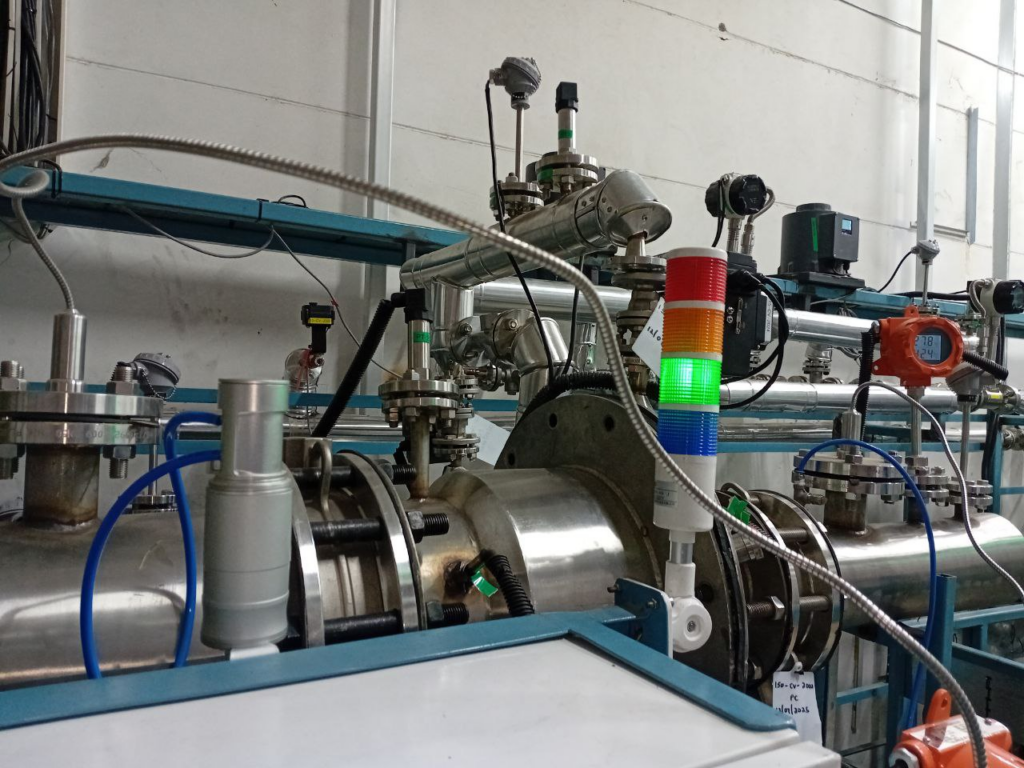
Octavia’s process optimization team evaluated Vaisala’s GMP343 carbon dioxide probe and found it to be ideal for their application. “In addition to a wide range, we also required high accuracy below 400ppm, which was not possible with most of the sensors that we tried.” Khamis explains. “So we were delighted to discover that the GMP343 could achieve this with ±3 ppm accuracy and long-term stability. Happily, this meant that we did not have to recalibrate before every test.”
The GMP343 employs Vaisala’s CARBOCAP® technology, a silicon-based non-dispersive infrared (NDIR) single-beam, dual-wavelength sensor with no moving parts. CARBOCAP® sensors offer high levels of stability over time because they have a micromechanical FPI filter which provides a reference measurement that compensates for any potential changes in light source intensity, as well as for contamination and dirt accumulation in the optical path. For Octavia, this stability represented an excellent ±2% of the reading per year.
In addition to the GMP343, Octavia also employs the Vaisala MGP241, which was developed specifically for carbon capture processes, delivering reliable measurements in wet and harsh conditions. Measuring inline with automatic temperature and pressure compensation, the range of the MGP241 extends from 0…100 vol-% CO2 and also employs CARBOCAP® technology for long-term stability. The MGP 241 was found to be ideal for measurements after adsorption.
Octavia Carbon’s DAC process
There are three main phases in the process – Adsorption, Desorption and Liquefaction/Injection. Each phase requires energy, but with Kenya’s easy access to renewable geothermal energy, Octavia’s processes are low-cost and carbon negative.
In the first phase, ambient air (containing ̴ 430ppm CO2) is pulled into the DAC machine where it passes through a filter containing chemical sorbents. These chemicals selectively bind with carbon dioxide, effectively removing it from the air, until the filter material becomes fully saturated with CO2.
In the desorption phase, indirect heat under vacuum is applied to the filter material causing it to release the concentrated CO2, which is extracted. This process regenerates the filters for reuse.
In the final stage, the captured CO2 is compressed and cooled, which causes it to liquify so that it can then be transported to secure geological sites where it is injected deep underground into appropriate rock formations. Under these conditions, and given time, the CO2 gradually mineralizes through a process known as carbonation, and becomes a permanent part of the rock.
Importantly, Octavia’s DAC process is completely modular and therefore scalable, so the company has ambitious growth targets. It has a target of 1,000 tonnes of CO₂ captured annually by the first commercial-scale plant (Project Hummingbird) by 2026, and is aiming for over a million tons removed annually by 2030.
Summary
Vaisala’s Product Line Manager Antti Heikkilä says: “We are delighted to be able to help Octavia Carbon with this exciting project. Our unique CO2 probes were developed specifically for challenging applications such as this. However, with ‘Taking Every Measure for the Planet’ as our Core Purpose, this project is a perfect example of the ways in which Vaisala’s measurement technology is helping to fight climate change.”
“Ultimately, the role of DAC will be dictated by the cost/tonne of CO2 captured,” Khamis explains. “We are fortunate in the Rift Valley to benefit from carbon-free geothermal energy, but the scalability of our technology will depend heavily on process optimization.”
Accurate and reliable CO2 measurements are essential for both the process optimization and operational teams at Octavia Carbon. Without accurate measurements, it would not be possible to select and improve sorbent performance. Similarly, accurate measurements enable effective process control, enabling operational staff, for example, to identify the exact moment of sorbent saturation.
The accurate and timely identification of the sorbent saturation point is essential for process efficiency, helping to maximise CO2 capture while minimizing costs, saving time and lowering process energy consumption.
Finally, and possibly most importantly, it is essential that Octavia Carbon’s customers have full confidence in the accuracy and reliability of the CDR that they purchase. This will be underpinned by third-party accreditation, but that also entirely depends upon accurate CO2 measurements.ENDS