

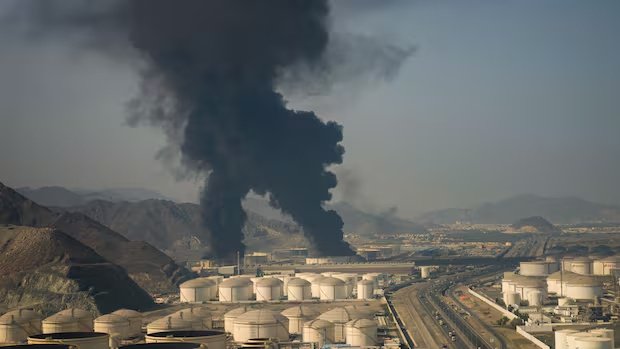
The fragile balance of global energy security has been shaken once again as Iran launched coordinated airstrikes on oil and gas facilities across the Gulf region. Targets in Kuwait, Qatar, and Saudi Arabia were hit on Thursday, marking a sharp escalation in hostilities following an Israeli strike on Iran’s critical South Pars gas field.
The attack on South Pars—the backbone of Iran’s energy sector—appears to have triggered a swift and calculated response. Iranian officials have since issued a stark warning: any further aggression against its oil and gas infrastructure will be met with intensified retaliation.
Energy Markets React
The geopolitical shockwaves have rippled through global markets. Brent crude, the world’s leading oil benchmark, has surged by more than 50% since the conflict escalated in late February, reflecting deepening concerns over supply disruptions.
At the heart of the crisis lies the Strait of Hormuz—a narrow but vital corridor responsible for transporting nearly one-fifth of the world’s oil. Reports indicate that the passage is now nearly impassable, raising alarm bells for energy-dependent economies worldwide.
North American markets responded swiftly, opening to steep losses amid uncertainty and fears of prolonged instability in the Gulf.
A Calculated Response or Wider Conflict?
While military tensions continue to mount, Donald Trump sought to reassure markets by downplaying the economic impact, suggesting the fallout could have been more severe.
Pressed on the possibility of U.S. ground troop deployment, Trump stated, “I’m not putting troops anywhere,” though he stopped short of ruling out future action, adding that he would not publicly disclose any strategic decisions.
Global Implications
This latest escalation underscores the vulnerability of global energy infrastructure in times of conflict. With key production sites under threat and critical supply routes at risk, the situation presents a complex challenge for governments, investors, and industries reliant on stable energy flows.
As tensions continue to unfold, the world watches closely—aware that any further disruption in the Gulf could have far-reaching consequences for global trade, fuel prices, and economic stability.