











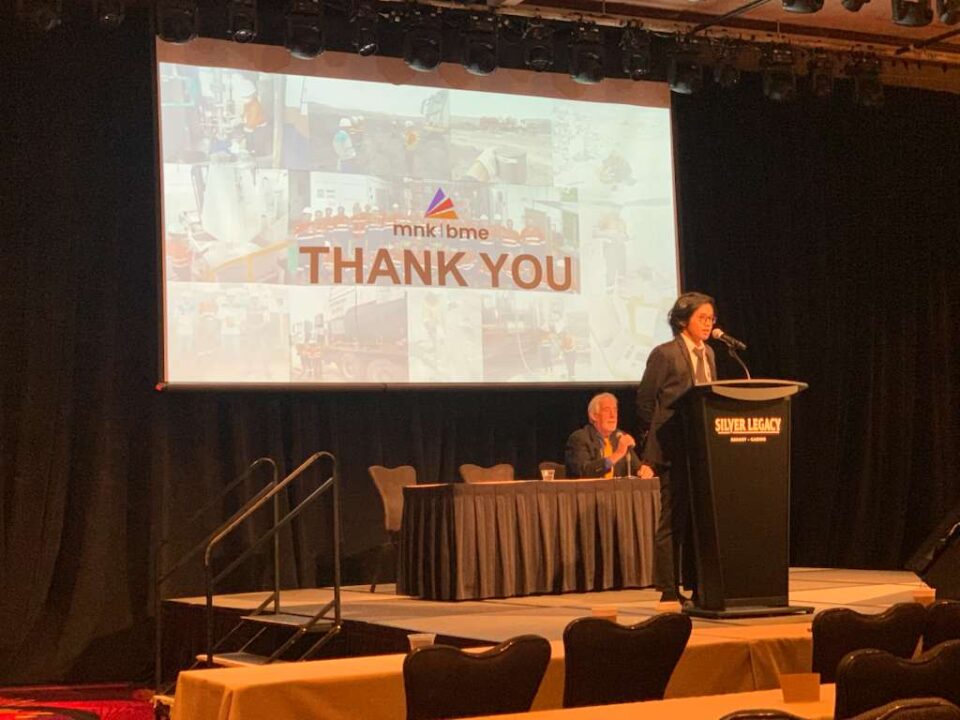
MNK BME, a joint venture (JV) between Indonesia’s PT Multi Nitrotama Kimia (MNK) and BME Indonesia, has successfully implemented the reuse of used transmission oil as a fuel agent in emulsion explosive (EE) formulations, delivering this innovation directly to Indonesia’s mining sector.
Khiva Haidar Shauma Tassno, Laboratory Technician at MNK BME, explained that incorporating recycled used oil into EE formulations aligns with industry sustainability goals while preserving high-performance blasting.
“Recycling used oil reduces carbon emissions from disposal via incineration, landfilling, or improper handling, reducing mining’s greenhouse gas footprint,” he said. “This, while also transforming a potential environmental hazard into a productive resource.”
He said that using transmission oil, which accounts for 30% of one of the prominent mines in Indonesia’s total used oil supply, expanded the acceptable specifications for used oils in EE. “It increases the volume of recycled material that can be repurposed,” he said. “This significantly reduces hazardous waste volumes while maintaining – or even enhancing –blasting performance and efficiency.”
The shift also replaces costly virgin hydrocarbons, mainly refined biodiesel. “Used transmission oil is typically available reduced costs compared to refined alternatives, allowing substantial reductions in explosives production expenses,” he noted.
Quality control critical
Tassno noted that not all used oils are suitable for EE formulations. “Impurities such as water, metal particles, oxidation products or other contaminants can disrupt emulsion stability,” he explained.
Such disruptions can lead to crystallisation of the ammonium nitrate oxidiser phase or phase separation in the water-in-oil matrix, compromising detonation performance. This includes reduced velocity of detonation (VOD), incomplete energy release, or failure.
A 2024 incident at an Indonesian mine illustrated the risk: off-spec used oil caused a poor blast outcome. VOD declined from 5 123 m/s to 4 293 m/s, and production and down-the-hole (DTH) delivery also declined due to being unable to incorporate used transmission oil.
“This reinforced the critical need for strict quality control and adherence to validated specifications when repurposing waste oils in EE production,” he emphasised.
Oxidation and matrix degradation challenges
Tassno said that research into substituting fuel oil with transmission oil began in April 2025. “Transmission oil contains more additives and has a different polarity in comparison with used engine oil, both could lead to the disruption of emulsion’s colloidal matrix which compromises EE stability,” he said.
Laboratory analysis examined used engine and transmission oils for impurities and hydrocarbon composition, with various EE formulations produced and tested.
He said that key challenges included higher hydrocarbons and aromatics accelerating oxidation. “Elevated metals, cations, and oil additives disrupted stability and degraded the matrix,” he added.
Stress test and gassing results validate stability
Tassno said stress testing and crystal growth observation were instrumental in developing stable formulations using used fuel and transmission oil.
“We assessed six base EE formulations (A to F) across six increasing loadings (1 to 6) of used transmission oil blended in escalating proportions with used engine oil,” he said.
He explained that this enabled controlled evaluation of concentration effects on stability, crystallisation and performance.
“Stress tests showed no anomalies; all samples passed specifications based on laboratory results, confirming good overall stability with used transmission oil,” Tassno said.
Crystal counts showed no crystallisation at the lowest loading, but crystals appeared as the loading increased. “This demonstrates that used transmission oil influences crystallisation tendency and can destabilise EE at higher concentrations,” he clarified.
Gassing tests were anomaly-free, with all emulsions meeting specifications. “Thus, formulations with used transmission oil can be effectively sensitised and initiated by primers,” he added.
Used oil shines in field trials
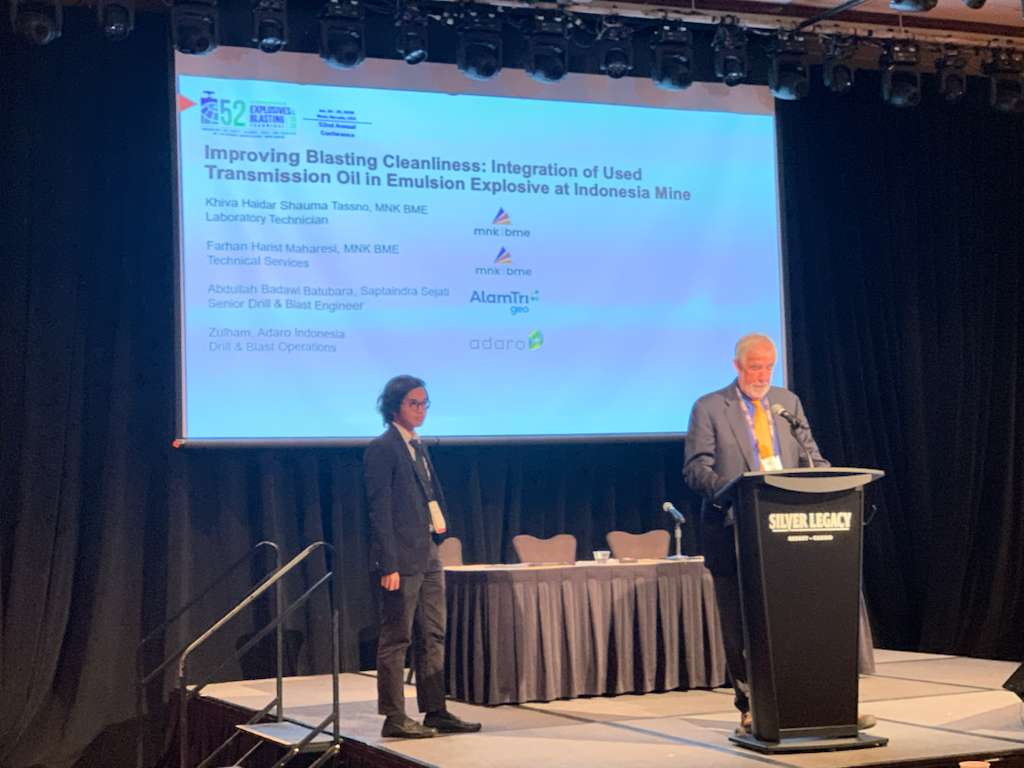
In April 2025, Farhan Harist Maharesi, Technical Services Engineer at MNK BME, Abdullah Badawi Batubara, Drill and Blast Engineer at PT Saptaindra Sejati , and Zulham, Drilling and Blasting Operations Section Head at Adaro Indonesia carried out comprehensive blast evaluations using the newly developed emulsion explosive (EE) formulations.
These experts jointly assessed the performance and effectiveness of the EE formulations under operational mining conditions.
“We measured VOD, fragmentation and digging time across 12 benches,” Maharesi said.
A typical bench used 200 mm diameter holes in a staggered pattern, loaded with a 70:30 used oil EE blend, achieving average powder factor of 0.24 kg/m³.
He said that visual observations confirmed good heave, indicating effective energy release and material displacement.
“Post-blast digging efficiency was strong,” Maharesi said. “Digging times ranged from 9,02 s to 11,54 s, averaging 10,40 s across sampled benches (with a noted average of 10,12 s).”
The formulations delivered an average VOD of 5 263 m/s from five counts of measurement, confirming stable and efficient performance.
“The average fragmentation was 660 mm, supporting efficient loading, hauling, and crusher feed with minimal oversize,” he said.
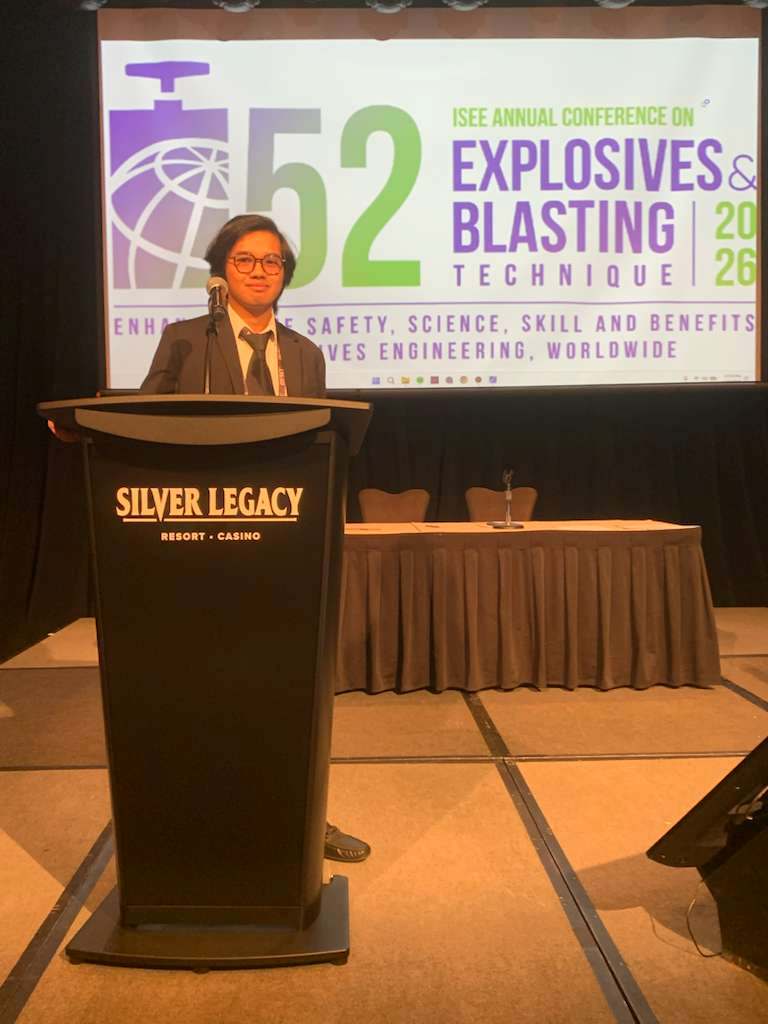
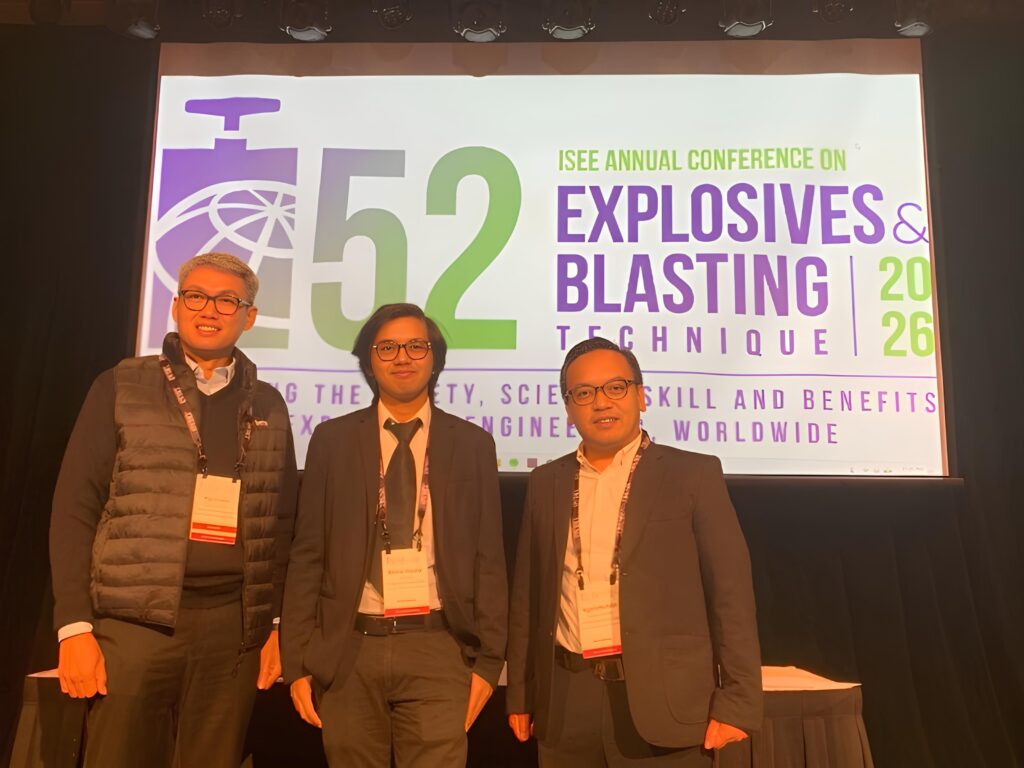
So successful was the result of the project that MNK BME presented the outcome of the project in a paper titled “Improving Blasting Cleanliness: Integration of Used Transmission Oil in Emulsion Explosive at Indonesia Mine” at the International Society of Explosives Engineers 52nd annual conference in January, held in Reno, Nevada, USA.
Maharesi said that the approach also delivered major cost benefits. “We estimate around 65% savings on the diesel fuel portion of explosives costs,” he said.
Notably, recycled used transmission oil is projected to reduce explosives-related CO₂ emissions by approximately 66 000 kg per month, a 56,7% decrease.
“Ultimately, the MNK BME’s successful integration of used oil in EE production sets a forward-looking example for responsible innovation in blasting,” Tassno concluded. “We continue to demonstrate that sustainability, cost-effectiveness, and reliable performance can go hand in hand.”

Discover more from Africa-Middle East Mining and Energy News
Subscribe to get the latest posts sent to your email.