











Africa is entering a decisive period in its energy development, with growing electricity demand, expanding industrial ambitions and an urgent need to modernise aging infrastructure. Yet despite the continent’s vast renewable energy resources, natural gas reserves and growing pipeline of energy projects, access to affordable, long-term financing remains one of the greatest obstacles to delivering the energy infrastructure required for economic growth.
According to the International Energy Agency (IEA), Africa requires approximately US$200 billion in annual energy investment by 2030 to meet its energy and climate-related development objectives. At the same time, the continent continues to attract only a small proportion of global clean energy investment, highlighting the significant gap between investment potential and actual capital deployment.
The question facing governments, developers and financial institutions is increasingly clear: Who will finance Africa’s next generation of energy projects, and what needs to change to unlock that investment?
From investment ambition to bankable projects
Across Africa, governments are introducing energy reforms, expanding independent power producer programmes and encouraging greater private-sector participation. Renewable energy projects, gas-to-power developments, battery storage systems and regional transmission networks are creating new opportunities for investors.
However, the availability of investment capital does not automatically translate into projects reaching financial close. Currency volatility, regulatory uncertainty, financially constrained utilities, inadequate transmission infrastructure and concerns about the creditworthiness of electricity buyers continue to affect project bankability. For international investors, the challenge is often not a lack of interest in African energy markets, but the ability to structure projects that deliver acceptable risk-adjusted returns.
Addressing these barriers will require closer cooperation between governments, development finance institutions, commercial lenders and private-sector developers.
The growing importance of blended finance
Blended finance is emerging as an important mechanism for mobilising investment in African energy infrastructure. By combining concessional funding from development finance institutions with commercial capital, blended finance structures can help reduce investment risks and improve the financial viability of projects that might otherwise struggle to attract private investors.
Guarantees, political risk insurance, local-currency financing and innovative credit enhancement mechanisms also have the potential to unlock additional investment. However, financing models must move beyond individual transactions towards scalable solutions capable of supporting entire energy markets.
The challenge is not simply to finance a handful of flagship projects, but to establish investment frameworks that can consistently deliver new generation capacity, modernised grids and reliable electricity access across the continent.
Private capital will be essential to Africa’s energy future
As governments face competing fiscal pressures, private-sector investment will be critical to expanding Africa’s energy infrastructure. Corporate power purchase agreements, electricity wheeling arrangements, energy trading platforms and independent power producer frameworks are opening new pathways for private investment.
Large industrial energy consumers, particularly in mining and manufacturing, are also becoming increasingly important participants in the energy market as they seek reliable and competitively priced electricity. These developments are creating opportunities for project developers, technology providers, infrastructure investors and financial institutions.
However, unlocking the full potential of private capital will depend on predictable regulations, credible off-take arrangements, transparent procurement processes and stronger project preparation.
The next phase of Africa’s energy development will be defined not only by how much capital is available, but by how effectively that capital can be deployed.
Turning financing discussions into investment outcomes
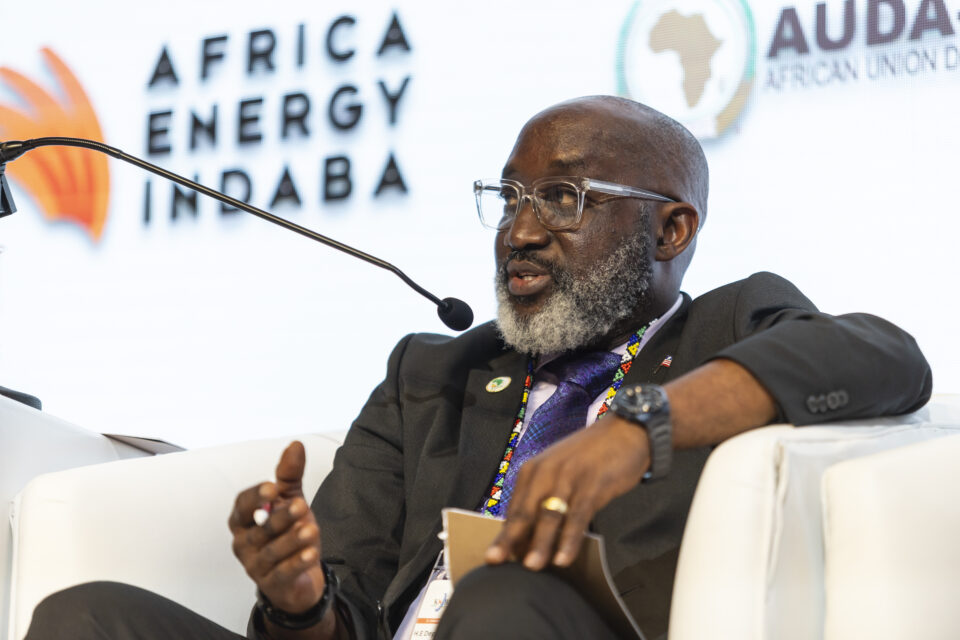
The financing of Africa’s energy transition and wider energy infrastructure development will be among the critical issues explored at the Africa Energy Indaba 2027, taking place from 2–4 March 2027 at the Cape Town International Convention Centre (CTICC).
Bringing together energy ministers, policymakers, development finance institutions, investors, utilities, project developers and private-sector leaders, the event will provide a platform to examine the financing mechanisms, regulatory reforms and partnerships needed to accelerate energy investment across the continent.
Discussions will explore project bankability, financing next-generation independent power producers, transmission and distribution investment, private power procurement and the growing importance of regional electricity markets.
As Africa seeks to strengthen energy security, expand electricity access and accelerate industrialisation, the ability to mobilise investment at scale will be central to its economic future.
Africa does not lack energy resources, development potential or investment opportunities. The challenge is creating the financial and regulatory conditions that allow projects to move from ambition to implementation.
The question is no longer whether Africa needs investment in energy infrastructure. It is how quickly governments, financiers and the private sector can work together to deliver it.

Discover more from Africa-Middle East Mining and Energy News
Subscribe to get the latest posts sent to your email.

