











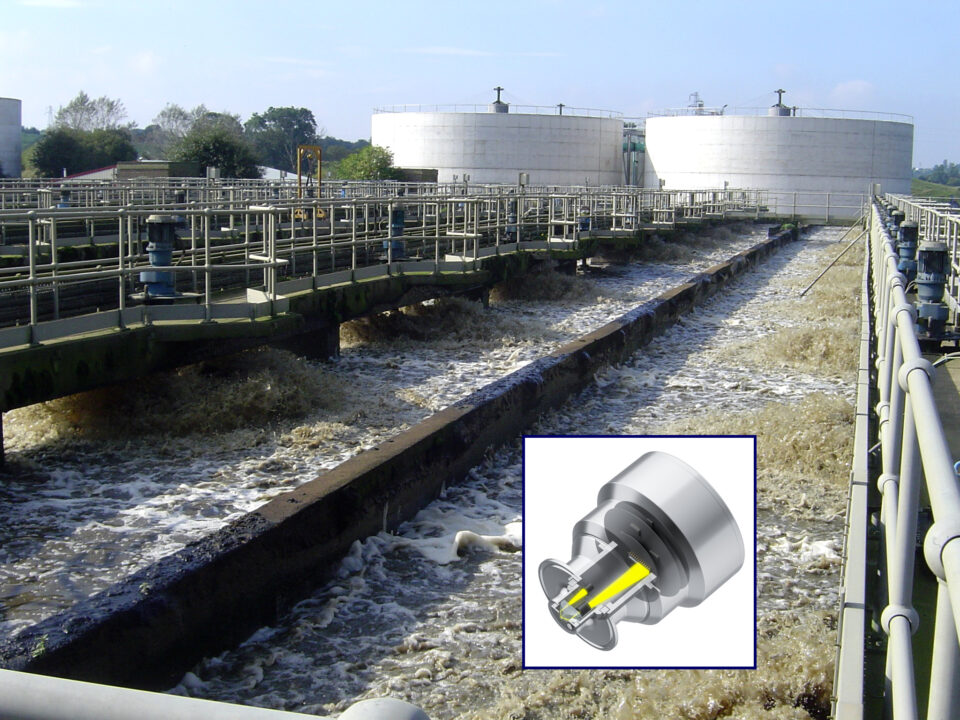
Fortunately for process managers, changes in the level of dissolved compounds in a liquid result in changes in the refractive index (RI) of that liquid. Vaisala’s inline refractometers have exploited this phenomenon, providing accurate liquid measurements for many years in a wide range of industries. These refractometers are frequently used for process monitoring, but as a reliable technology in even the most challenging conditions, they can also be utilised in wastewater management.
In-line RI measurements allow process managers to implement real-time control by monitoring the progress of processes such as evaporation, distillation, fermentation, blending, drying, wet-mixing, interface detection, dilution, extraction, clean-in-place, washing and more. In addition, Vaisala’s inline refractometers are used to monitor wastewater, particularly where industrial process managers need immediate notification when a spill or a leak affects the strength of wastewater.

Why use Vaisala RI?
Many industrial applications can be challenging for monitoring technologies – aggressive chemicals, sticky sugars and syrups, extreme temperatures, and corrosive acids, for example. Vaisala’s Polaris™ family of refractometers have been developed to operate in these conditions, measuring concentrations of acids, alkalis, alcohols, hydrocarbons, solvents, and other solutions directly in pipelines and tanks.
Polaris refractometers are delivered factory-calibrated, making them maintenance-free and eliminating the need for recalibration over time. In contrast with many other liquid concentration methods, Vaisala’s refractometers are not affected by particles, bubbles, crystals or colour, so these instruments can be employed in a wide variety of solutions for liquid identification and for monitoring the concentration of dissolved components – a particularly important feature in wastewater monitoring.
Case study: Wastewater management at a large food & beverage cooperative, USA
Producing 24 million cases of products annually, a large manufacturing cooperative in the USA had a requirement to improve wastewater treatment to lower the strength of final effluent and reduce the risk of exceedances.
One of the key factors affecting the performance of the treatment plant was variability in the sugar content of the effluent, which substantially affected BOD levels. A Vaisala refractometer was therefore installed in the effluent line, prior to the treatment plant. This provided real-time data which delivered a number of benefits.
Most importantly, any spikes in sugar content were detected immediately so that remedial action could be taken. In addition, data on the sugar spikes enabled staff to diagnose the root cause, so that it could be prevented in the future. As a consequence, the cooperative has experienced a six-figure cost avoidance at this facility alone. The cooperative has also been able to avoid surcharges, reduce material loss and optimise its operational procedures.
ENDS

Discover more from Africa-Middle East Mining and Energy News
Subscribe to get the latest posts sent to your email.