










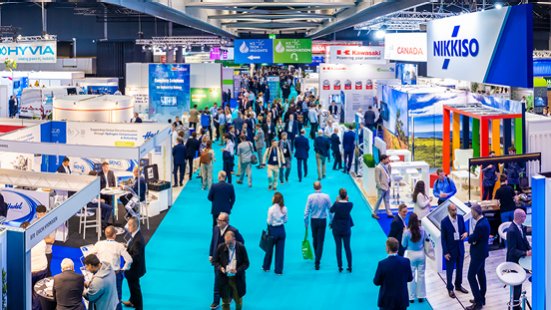
Saudi Arabia will host the inaugural Hydrogen Arabia Summit & Exhibition on 8–9 December 2025 at the Crowne Plaza Riyadh RDC, establishing the Kingdom as a global hub for hydrogen and clean energy collaboration. Organised by RX, the company behind the World Hydrogen Summit, the event will feature a high-level conference and exhibition bringing together senior government officials, global energy leaders, investors, and innovators in hydrogen and carbon capture technologies.
Over two days, participants will engage in strategic discussions and technology showcases focused on how hydrogen and carbon capture can accelerate Saudi Arabia’s Vision 2030 and Net Zero 2060 ambitions. The summit will also highlight the Kingdom’s Circular Carbon Economy framework, launched during its G20 Presidency, which promotes comprehensive emissions management and energy stability.
Saudi Arabia has committed over SAR 1 trillion (US$270bn) to the power sector, including SAR 880bn (US$235bn) dedicated to renewable energy. Major initiatives such as the NEOM green hydrogen project and a US$10bn investment from the Public Investment Fund demonstrate the Kingdom’s determination to become a global hydrogen leader.
Vasyl Zhygalo, Managing Director, Middle East and Emerging Markets, RX, Hydrogen Arabia, said, “Hydrogen Arabia marks a significant milestone as we expand our global energy portfolio into Saudi Arabia, one of the most dynamic markets for clean energy transformation. This event will serve as a crucial platform for regional and international leaders to collaborate on hydrogen and carbon capture solutions, create new opportunities for investment and innovation, and strengthen long-term energy security. It will also reinforce Saudi Arabia’s position as a hub for sustainable energy and a key player in the international hydrogen market.”
Speakers from IRENA, ENOWA-NEOM, SEFE, Air Liquide, Hy24, and Aramco Ventures will discuss investment, global demand, certification, and decarbonisation strategies. Zhygalo added, “The agenda will gather regional and international leaders to explore how policy and investment can accelerate the adoption of technology. By focusing on practical pathways for hydrogen and CCUS, the discussions in Riyadh aim to drive both industry growth and global trade.”

Discover more from Africa-Middle East Mining and Energy News
Subscribe to get the latest posts sent to your email.